
Drain Cleaning Services in Dallas
If you’re dealing with a slow drain, a stubborn clog, or a complete backup in your Dallas home, the solution requires a professional diagnosis and the right tools for the job. In Dallas, common culpri...
Need Help? Call Now for Free Estimate
Speak with a local expert today
If you’re dealing with a slow drain, a stubborn clog, or a complete backup in your Dallas home, the solution requires a professional diagnosis, learn more about rodent removal services in dallas and the right tools for the job. In Dallas, common culprits include invasive tree roots from our live oaks and pecans, the hard, calcifying mineral scale from our water supply, and the grease and soap scum buildup that plagues kitchens and bathrooms. Effective drain cleaning here isn’t just about pouring a chemical down the pipe; it involves identifying the specific obstruction, its location, and the condition of your pipes to choose the correct method—whether that’s hydro-jetting, motorized augering, or camera inspection. The process is tailored to Dallas homes, accounting for our specific soil, aging infrastructure, and common plumbing issues. A professional plumber will provide a clear explanation and transparent pricing after assessing your unique situation.
Why Dallas Drains Are Prone to Specific Problems
To understand drain cleaning in Dallas, you first have to understand what’s happening beneath our lawns and streets. Our environment and infrastructure create a perfect storm for certain types of blockages.
Consider the legacy of our tree canopy. Neighborhoods like Lakewood, Highland Park, and Preston Hollow are renowned for their beautiful, mature trees. However, the roots of live oaks and pecans are relentlessly seeking moisture. A tiny crack or loose joint in an older clay or cast-iron sewer line becomes a beacon. Those roots infiltrate, growing and expanding inside the pipe like a living net, catching every bit of passing waste until flow slows to a trickle. This isn’t a simple clog; it’s an organic intrusion that requires more than a snake.
Then there’s our water. Dallas draws from surface reservoirs like Lake Ray Hubbard and Lake Lewisville, which means our water is relatively hard. As it travels through your pipes, minerals like calcium and magnesium deposit on the interior walls. Over years, this scale builds up, gradually narrowing the pipe’s diameter. A drain that once flowed freely becomes prone to catching hair, soap, and other debris. This calcification is a slow, silent process, often unnoticed until a minor incident causes a major backup.
Finally, consider the age of many Dallas homes. Areas like the M Streets, Winnetka Heights, and East Dallas feature charming homes built decades ago. Many still have original galvanized steel or cast-iron drain lines. These materials corrode from the inside out, creating rough, uneven surfaces that snag everything. They also eventually fail, leading to collapses or bellies (sags) in the line where water and waste pool instead of flow. Cleaning a collapsed pipe is impossible; it must be replaced. This is why diagnosis before action is so critical.
The Professional Toolbox: Beyond the Plunger
When you call a professional plumber for a drain issue in Dallas, they aren’t arriving with just one tool. They’re bringing a diagnostic mindset and a range of solutions, each suited for a different problem. The right tool depends entirely on the "what" and "where" of your clog.
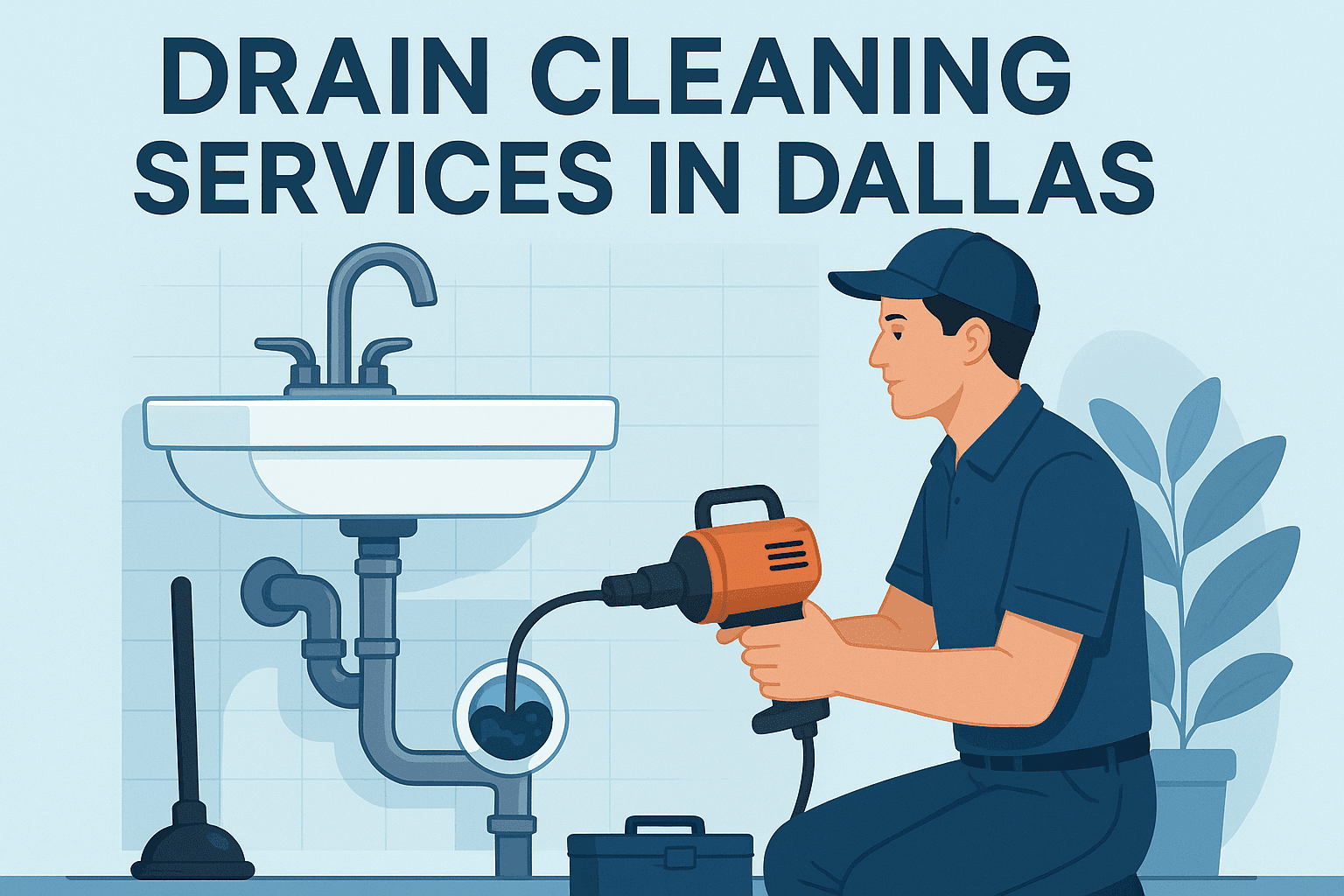
For a simple, localized clog in a sink, shower, or toilet line—often caused by a dense wad of hair, soap, or a small object—a motorized drain auger (or "snake") is the standard first line of defense. A skilled technician feeds a flexible, rotating cable with a cutting head down the line to hook, break apart, or retrieve the obstruction. However, here’s the thing: an auger clears a path but doesn’t clean the pipe. It punches a hole through the clog, leaving the pipe walls still coated with residue, which means a recurrence is likely.
For the more systemic, Dallas-specific problems, a different approach is needed. Hydro-jetting is the industrial-grade solution. Imagine a pressure washer for your pipes. The technician feeds a specialized hose with a multi-directional nozzle into your drain line. Then, they unleash water at pressures ranging from 1,500 to 4,000 PSI, scouring every inch of the pipe’s interior. This process blasts away grease, scale, mineral buildup, and even the fine tendrils of tree roots. It restores the pipe to near-original flow capacity. Hydro-jetting is particularly effective for main sewer line clearing and is the recommended follow-up after root cutting to remove all organic material.
But how do you know which tool to use, or if the pipe is even intact? This is where the most important tool in the modern plumber’s arsenal comes in: the drain inspection camera. This is a game-changer. A high-resolution, waterproof camera on a flexible rod is fed into the drain, transmitting real-time video to a monitor. The technician can literally see the problem: a ball of roots, a grease plug, a collapsed pipe section, or a misaligned joint. This turns guesswork into certainty. You get a definitive diagnosis and can see the evidence for yourself. It also allows for precise location of the issue, saving time and unnecessary excavation if a repair is needed.
What Happens When You Call for Drain Cleaning in Dallas
Making the call is the first step toward a solution, and understanding the process can provide peace of mind. Here’s a typical sequence of events when you contact a professional plumbing service in Dallas.
Your call will be answered by a local dispatcher or customer service representative who understands Dallas plumbing. They’ll ask a few key questions to triage the situation: Which fixture is affected? Is it a single drain or multiple? Is there any water backing up or overflowing? This helps them determine if it’s an emergency requiring immediate dispatch or a scheduled appointment.
A licensed, insured plumber will arrive at your home in a clearly marked vehicle, often equipped with the tools mentioned above. They’ll start with a conversation, asking for more details about the history of the problem. Then, they’ll perform an initial assessment, which may involve checking other drains in the house to see if the problem is isolated or systemic.
For most main line or serious clogs, the plumber will likely recommend a camera inspection first. This is the pragmatic choice. It may involve a separate diagnostic fee, but it saves money in the long run by ensuring the correct solution is applied. They’ll locate your main cleanout access (usually a white PVC pipe with a cap near the foundation) and feed the camera in. Together, you’ll watch the screen as it travels through your pipes, identifying the obstruction and the pipe’s material and condition.
Based on the camera’s findings, the plumber will explain your options clearly. “You have a partial root intrusion at the 25-foot mark. We can auger it to restore flow today, but I recommend hydro-jetting to thoroughly clean the roots and scale, which will give you longer-lasting results.” Or, “The camera shows a complete collapse in the old cast-iron line. Cleaning won’t work; this section will need to be excavated and replaced.” They will provide a transparent, upfront quote for the recommended service before any work begins.
Once you approve the plan, they’ll proceed with the drain cleaning service. Afterward, a reputable plumber will often run the camera again to show you the clear, clean pipe, providing proof of the work completed. They’ll explain any follow-up recommendations, such as periodic maintenance hydro-jetting for root-prone lines or the use of enzyme-based cleaners instead of corrosive chemicals.
Understanding Investment and Avoiding Stopgap Solutions
When considering drain cleaning in Dallas, it’s helpful to understand the landscape of service and cost. A professional drain cleaning service is an investment in your home’s plumbing health. Pricing is not a flat fee; it is project-based and varies significantly depending on the location of the clog, the method required, and the time involved.
A simple auger clear for a bathroom sink might be a straightforward, lower-cost visit. A hydro-jetting service for a main sewer line, which uses specialized equipment and more time, represents a higher investment. A diagnostic camera inspection typically has its own fee, which is often applied toward the cost of any subsequent cleaning or repair work you authorize. Crucially, any quote should be provided after the initial diagnosis, not before. Be wary of any service that gives a firm price over the phone without seeing the problem.
This brings us to the false economy of chemical drain cleaners and big-box store gadgets. Those bottles of corrosive liquid might seem like a quick fix, but they are a significant cause of pipe damage in Dallas homes. They generate heat and react with the clog, but they also react with your pipes, especially older metal ones, accelerating corrosion and potentially leading to leaks. They are also highly hazardous to people, pets, and the environment. Similarly, a small hand-crank auger from a hardware store can only reach so far and, in inexperienced hands, can scratch or damage pipe joints. For a true, lasting solution that protects your plumbing system, professional equipment and expertise are not just a luxury—they are the only sensible choice.
Your Dallas Home and Proactive Drain Health
Drain issues often have a seasonal rhythm in North Texas. Late summer into fall, after long periods of heat, tree roots are most aggressively seeking water, making root intrusions more common. The holiday season, with increased cooking and house guests, can strain kitchen drains and toilets. Being aware of these patterns can help you stay proactive.
The best defense is informed maintenance. For Dallas homeowners, this means being mindful of what goes down the drain: using sink strainers, avoiding pouring grease down the kitchen sink, and considering a hair catcher in the shower. For homes with known root issues or older pipes, scheduling a periodic maintenance hydro-jetting every 18-24 months can prevent catastrophic backups and extend the life of your sewer line. It’s far less costly and disruptive than an emergency repair at midnight on a holiday.
Ultimately, a clear drain is about more than convenience; it’s about the integrity of your home. From the historic bungalows of Oak Cliff to the newer constructions in Frisco and Allen, every Dallas home relies on this hidden network of pipes. When they fail, it’s more than an inconvenience—it’s a threat to your property. Professional drain cleaning provides a definitive solution, restoring flow and function with a clarity and longevity that DIY methods cannot match. It’s a service rooted in local knowledge, delivered with the right tools, and focused on giving you a lasting result and genuine peace of mind.
Is a stubborn clog disrupting your Dallas home? Get a clear diagnosis and a lasting solution. Call a trusted local plumber today at (214) 555-0123 for professional drain cleaning service.
