
Best Roofing Materials 2026: 6 Options Ranked by Lifespan, Cost and Climate Fit
Compare six roofing materials by lifespan, installed cost and climate fit. See why asphalt shingles win on value and standing seam metal wins on longevity.
Read MoreWondering if your roof needs replacing? The top warning signs are shingles older than 20–25 years, granule loss in gutters, and daylight visible through your attic. Here are the 7 key indicators to look for — and when repair vs. replacement makes financial sense.
Speak with a local expert today
By the HomeSimple Editorial Team | Last Updated: May 2026 | Reviewed Quarterly
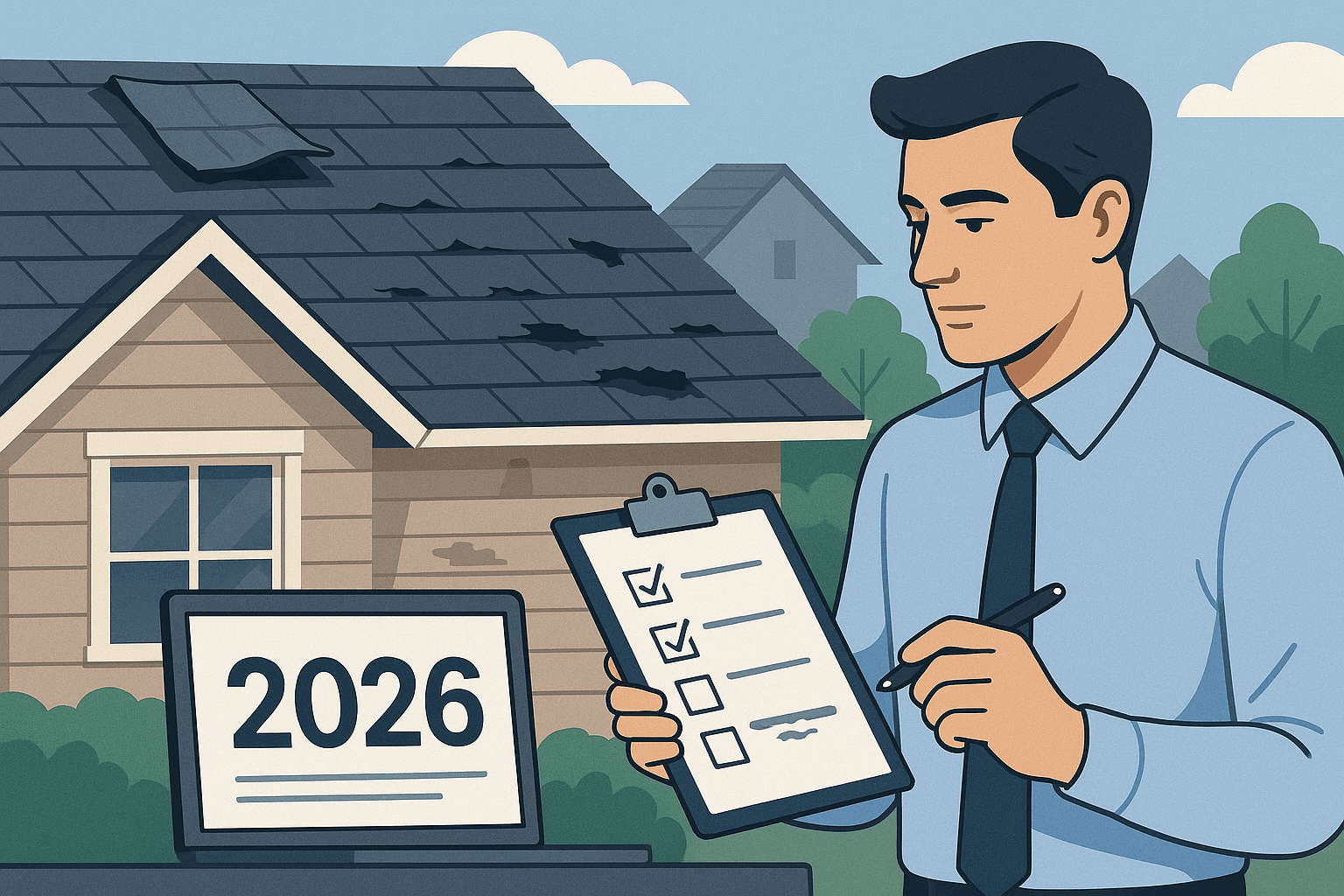
If you're wondering whether your roof needs replacing, the top warning signs are shingles older than 20–25 years, visible granule loss in gutters, (learn more about home energy audit revealed: 8 hidden energy vampires costing you $2,000+ yearly) (learn more about hvac repair services in tampa) (learn more about hvac maintenance services in dallas) (learn more about emergency plumbing services in dallas) and daylight visible through your attic. We evaluated 7 key indicators homeowners and contractors use to assess roof lifespan, repair-vs-replace economics, (learn more about pest control services in dallas: complete guide) and damage severity. This guide is built for homeowners facing the replace-vs-repair decision — not roofing contractors selling you an upgrade (learn more about the contractor vetting checklist: 9 red flags that separate pros from sketchy operators).
We evaluated each roof warning sign across 4 criteria:
| Criteria | Weight | Why It Matters |
|---|---|---|
| Cost consequence if ignored | High | Delayed replacement leads to exponentially higher interior damage costs |
| Visibility / ease of diagnosis | High | Signs you can identify yourself without a contractor visit |
| Tie to industry lifespan benchmarks | Medium | Based on NRCA and manufacturer-rated shingle lifespans |
| Frequency in contractor damage reports | Medium | Drawn from NRCA and HomeAdvisor claims data |
Data sources: National Roofing Contractors Association (NRCA), Insurance Information Institute, HomeAdvisor 2025 True Cost Report, Insurance Institute for Business & Home Safety (IBHS).
Best for: Diagnosing risk before any visible damage appears
Asphalt shingle rated lifespan: 20–25 years
Metal or tile lifespan: 40–70 years
The most reliable predictor of replacement need is age. Asphalt shingles cover roughly 80% of U.S. homes and carry a rated lifespan of 20–25 years. A roof past this threshold, even if it looks intact from the street, is operating beyond its structural warranty period. It is statistically more likely to fail under the next major weather event — hail, heavy snow, or high winds.
Homeowners who purchased an older home and don't know the roof's history. If your home was built between 1995–2005 and the original shingles have never been replaced, this is your first diagnostic checkpoint.
Best for: Identifying accelerated shingle breakdown before leaks start
What to look for: Sand-like dark granules accumulating in downspouts or gutter troughs
Risk level: High — granule loss accelerates UV damage and water infiltration beneath the shingle surface
Asphalt shingles are coated with mineral granules that block UV rays and repel water. As shingles age and break down, those granules shed off and collect in your gutters. Finding significant granule buildup — especially if your roof is only 10–15 years old — signals premature aging, often from manufacturing defects, hail impacts, or poor original installation.
Homeowners in hail-prone states (TX, CO, MN, OK, NE) or anyone whose roof has experienced at least one major storm in the past 2–3 years. Document with photos and file an insurance claim before paying out of pocket.
Best for: Confirming immediate replacement need with certainty
How to check: Turn off attic lights during daytime and look for light penetration through roof boards
Decking replacement add-on cost: $1.50–$3.00 per sq ft if the sheathing is compromised
If light is visible through your roof boards from the attic, your roof deck has structural gaps. Water, pests, and conditioned air are already moving through those gaps. This scenario almost always indicates full replacement — spot patching over structurally compromised decking is ineffective and typically voids contractor warranties.
Any homeowner doing a pre-contractor self-inspection. If light is visible, skip the repair-vs-replace debate — you're already past it. Get replacement quotes immediately.
Best for: Assessing weather and age-related degradation across the roof surface
Cost if ignored: Water infiltration leading to $3,000–$10,000 in interior structural damage
Decision threshold: If more than 30% of shingles are affected, replacement costs less than repeated patching over the remaining lifespan
Shingles curl in two ways: cupping (edges turn upward) and clawing (center rises while edges stay flat). Both indicate advanced weathering and loss of structural adhesion. Missing shingles — even isolated ones — create direct water entry points. NRCA guidelines indicate that when damaged shingles exceed 30% of the roof surface, full replacement is almost always more economical than continued patching.
Homeowners post-storm damage event. Document all affected areas with photos before any contractor visit — you'll need this for an insurance claim.
Best for: Identifying load-bearing deck failure requiring immediate contractor response
Collapse risk: Real under heavy snow loads, HVAC equipment weight, or sustained rain saturation
Structural repair cost: $1,500–$7,000 for decking alone, before new shingles are factored in
A sagging roofline — visible as a dip, wave, or depression across the ridge or flat sections — signals structural decking failure, rafter damage, or long-term water saturation of the sheathing. This is not aesthetic. Sagging sections cannot be patch-repaired. They require removal of compromised decking, structural repair, and full reshingling of the affected area at minimum.
Homeowners in heavy snow-load regions (Northeast, Midwest, Mountain West), or anyone whose home has had previous additions or repairs that may have introduced load inconsistencies in the deck.
Best for: Breaking out of a costly repair loop that masks an underlying replacement need
Average single leak repair cost: $400–$1,500 per incident
Break-even point: 2–3 repair calls typically represent 10–15% of full replacement cost
If the same leak has been repaired more than once — or if multiple distinct leaks appear in different locations — you are funding a diminishing returns cycle. Each patch addresses a symptom. According to HomeAdvisor 2025 data, homeowners who defer full replacement spend an average of $2,200 in cumulative repair costs before ultimately replacing, money that directly offset the replacement cost with nothing to show for it.
Anyone who has called a roofer more than twice in three years for roof-related issues. Add up your repair costs, then get a replacement quote. The math usually tells the story.
Best for: Diagnosing chronic moisture retention on shingle surfaces
What's happening: Organic growth traps moisture against shingles, accelerating granule loss and shingle softening
Cleaning cost: $150–$600 — treats the symptom, not the underlying degradation on older roofs
Dark streaking (caused by Gloeocapsa magma algae) and green moss growth both indicate surface moisture retention. Cleaning removes the growth, but on older roofs it typically reveals the granule loss and shingle softening that allowed growth to take root in the first place. Moss is particularly damaging: its root system physically lifts shingle tabs, creating gap-points for direct water entry.
Homeowners in humid climates, Pacific Northwest regions, or under significant tree canopy. Fix gutter drainage and trim overhanging branches before treating the roof surface.
| Warning Sign | Urgency | DIY Diagnosis? | Repair or Replace? | Cost If Ignored |
|---|---|---|---|---|
| Roof age 20–25+ years | Medium | Yes (check records) | Inspect first | Full replacement inevitable |
| Granule loss in gutters | Medium-High | Yes (check gutters) | Replace | $8,000–$18,000 |
| Daylight in attic | Immediate | Yes (attic check) | Replace | $3,000–$10,000+ |
| Curling/missing shingles | High | Yes (binoculars) | Replace if 30%+ | $5,000–$12,000 |
| Sagging sections | Immediate | Yes (from street) | Replace + structural | $10,000–$25,000 |
| Persistent leaks | High | Track repair receipts | Replace | $2,000–$6,000 cumulative |
| Moss/algae growth | Medium | Yes (visual) | Inspect then decide | $1,500–$5,000 |
This guide draws on NRCA roofing installation guidelines, Insurance Information Institute residential claims data, the HomeAdvisor 2025 True Cost Report, and IBHS storm resilience research for residential structures. We analyzed contractor repair-vs-replace decision frameworks and cross-referenced insurance adjuster practices for residential roofing claims. We excluded product-specific manufacturer data that could introduce brand bias. Last updated: May 2026. We review and update this guide quarterly.
The national average for a full roof replacement in 2026 ranges from $8,000 to $22,000 for a typical single-family home, depending on square footage, pitch, materials, and regional labor rates. Asphalt shingle replacement averages $3.50–$5.50 per square foot installed. Metal roofing runs $7–$14 per square foot.
Apply the 30% rule: if more than 30% of your shingles show damage, full replacement is typically more cost-effective than repeated repairs. Also factor in age — a roof within 3–5 years of its rated lifespan is almost always better replaced than patched.
Insurance typically covers sudden, accidental damage from hail, wind, or fallen trees. Most policies do not cover damage from wear, neglect, or age. Roofs older than 20 years are often paid out at actual cash value (ACV) rather than replacement cost — meaning you pay the depreciated difference out of pocket.
Standing seam metal and slate offer 40–70 year lifespans and the best long-term cost-per-year value. Architectural (dimensional) asphalt shingles last 25–30 years and offer the best upfront cost-to-lifespan ratio for most homeowners. Three-tab shingles (20-year rated) are being phased out by most reputable contractors.
Most residential replacements complete in 1–3 days. Complex rooflines, multi-story homes, or structural decking repairs can extend the project to 5–7 days. Weather delays add unpredictability — plan for buffer time.
Partial replacement is technically possible but often creates color and aging mismatches. More importantly, if degradation affects the whole roof, partial replacement may not resolve water infiltration. Get a comprehensive inspection before committing to partial work.
Yes — always get at least 3 quotes from licensed contractors. Roofing prices vary 20–40% between contractors in the same market. Verify each contractor's license and insurance status with your state's licensing board before signing any contract.
Late spring through early fall (April–October) is optimal for most U.S. climates. Cold temperatures slow asphalt shingle sealing and increase installation error risk. Many contractors offer off-season discounts (November–March) in exchange for scheduling flexibility.
Look for manufacturer-certified contractors (GAF Master Elite, CertainTeed SELECT ShingleMaster), minimum $1 million general liability coverage, and written labor warranties separate from the manufacturer's product warranty. Cross-reference reviews on Google, BBB, and your state contractor licensing portal.
This content is for informational purposes only and does not constitute financial, insurance, or contractor advice. Roofing costs, material availability, and contractor standards vary significantly by region and market conditions. Always obtain multiple licensed contractor quotes and verify your coverage terms with your homeowners insurance provider before making replacement decisions. Last updated: May 2026.
Compare six roofing materials by lifespan, installed cost and climate fit. See why asphalt shingles win on value and standing seam metal wins on longevity.
Read MoreCompare 8 types of roof repair providers for 2026, from manufacturer-certified contractors to local roofers, with costs, warranties and vetting tips.
Read MoreA roof inspection can cost nothing or several hundred dollars, and the difference is who is paying attention to what. We ranked eight options — independent certified inspectors, drone and aerial reports, contractor visits, and municipal programs — on independence, depth, documentation, and cost.
Read More